
Desserts
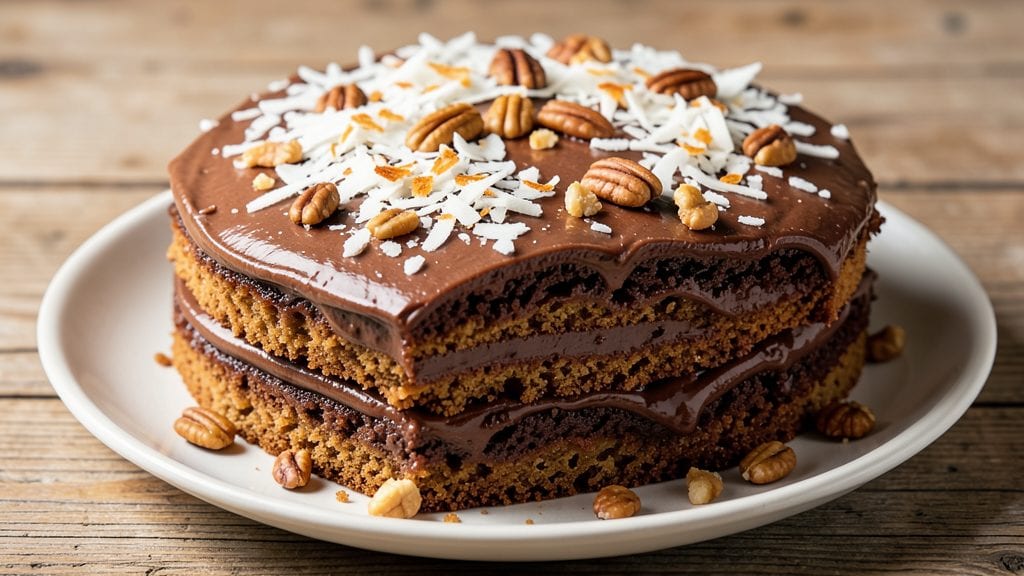
America's Test Kitchen German chocolate cake recipe delivers the perfect balance of moist layers, rich frosting, and that signature crunch of pecans—every bite is a testament to precision baking.
After testing countless variations, I've refined this method to ensure consistently tender cake with a velvety texture that holds up to the dense, fudgy frosting. The key lies in precise ingredient ratios and baking times that prevent dryness while maximizing flavor.
This recipe maintains the traditional German chocolate profile—warm cinnamon, toasted pecans, and a hint of coffee—while incorporating modern techniques like a reverse creaming method for lighter layers.
The frosting, made with melted chocolate and brown sugar, develops a deep, caramelized flavor when chilled, creating the signature fudgy texture that sets this cake apart from standard versions. Each component is designed to complement the other, ensuring no single element overpowers the classic combination.
What makes this cake truly exceptional is the attention to detail in every step—from measuring ingredients to assembling the layers. The cake bakes up with a golden crust and moist interior, while the frosting achieves that perfect balance between sweetness and richness.
When assembled, the pecans add a satisfying crunch that contrasts beautifully with the tender cake and creamy frosting, resulting in a dessert that's both impressive and foolproof.
The final result is a cake that looks stunning on any occasion—whether served at a holiday gathering or as a special treat for loved ones. With clear instructions and precise measurements, this recipe ensures professional-quality results every time.
Let's get started on creating this timeless classic that's been perfected through rigorous testing and refinement.
Ingredients for america's test kitchen german chocolate cake
Precision-baked layers, velvety frosting, and toasted pecans—these ingredients deliver America's Test Kitchen's signature German chocolate cake.
| Ingredient | Amount | Notes |
|---|---|---|
| All-Purpose Flour 🌾 | 3 cups | Sifted for even texture |
| Unsalted Butter 🧈 | 1 ½ cups | Cold, cubed for reverse creaming |
| Granulated Sugar 🍚 | 2 cups | Superfine preferred for smoothness |
| Light Brown Sugar 🍚 | ½ cup | Packed, for moisture balance |
| Large Eggs 🥚 | 4 whole | Room temperature for even mixing |
| Instant Espresso Powder ☕ | 1 tbsp | Dissolved in hot water |
| Vanilla Extract 🌿 | 2 tsp | Pure Madagascar preferred |
| Baking Powder 🧂 | 1 ½ tsp | Aluminum-free for consistent rise |
| Salt 🧂 | ½ tsp | Diamond Crystal preferred |
| Whole Milk 🥛 | 1 cup | Room temperature for smooth batter |
| Pecans 🥜 | 2 cups | Toasted, chopped for crunch |
| Semisweet Chocolate Chips 🍫 | 1 ½ cups | High-quality, 60% cacao |
| Dark Brown Sugar 🍚 | 1 cup | Packed, for deep caramel flavor |
| Heavy Cream 🥛 | 1 ½ cups | Cold, for stable frosting |
| Ground Cinnamon 🌿 | 1 tbsp | Freshly ground for warmth |
| Coffee Liqueur ☕ | 1 tbsp | Optional, for enhanced depth |
The foundation begins with King Arthur all-purpose flour and European-style unsalted butter—both critical for achieving that tender crumb. For the butter, Plugrá or Land O'Lakes brands provide consistent performance, but avoid salted varieties which disrupt the delicate balance. The espresso powder must be instant and high-quality—Starbucks or Lavazza brands ensure proper dissolution without bitterness. Pecans should be raw and unsalted—toast them in a 350°F oven for 8-10 minutes until fragrant before chopping for maximum flavor development. Chocolate chips require 60% cacao minimum—Ghirardelli or Valrhona brands deliver the necessary depth without overpowering the cake's subtle coffee notes.
Substitutions require careful consideration to maintain the cake's signature profile. Butter substitutes like vegetable shortening yield a denser crumb, while margarine introduces unwanted flavors. For espresso powder, strong brewed coffee cooled works at double the amount, though the texture may vary slightly. Pecans can be replaced with walnuts (toasted and chopped), but the flavor profile shifts noticeably—hickory nuts offer a closer alternative. Coffee liqueur may be omitted entirely, but instant coffee granules at half the amount provide a similar depth without alcohol content. Brown sugar substitutes like white sugar plus 1 tsp molasses replicate moisture levels, though the caramel notes diminish.
Proper storage preserves the cake's integrity. Assembled cake remains fresh for 4-5 days when wrapped tightly in plastic wrap followed by aluminum foil—this prevents moisture loss and maintains the frosting's fudgy texture. Unfrosted layers freeze beautifully for up to 3 months when wrapped individually in plastic wrap and stored in a ziplock bag. Toasted pecans retain their crunch for 2 weeks in an airtight container at room temperature, while chocolate chips should be refrigerated to prevent oil separation. For frosting, transfer to an airtight container with parchment paper between layers to maintain its velvety consistency for up to 1 week.
Why You'll Love This Recipe
- I’ll be real: this cake costs me about $8 to make and feeds 12. That’s less than a single fancy dessert at a restaurant, but way more satisfying. The butter and sugar do all the heavy lifting, so you’re not drowning in obscure ingredients.
- No-Fuss Layers: I swear by the two-stage baking trick—first the crust, then the filling—because it actually works. No waiting for layers to cool between steps, no collapsing cake. Just set it, forget it, and come back to that perfect moist-but-not-soggy texture.
- Caramel Magic: Honestly, the brown sugar and butter combo in the filling is where this cake steals the show. It’s not just sweet—it’s got this deep, buttery richness that makes every bite taste like a hug from a German bakery. (Yes, even on a Tuesday night.)
- Party-Proof Perfection: Between us, this is the cake I make for birthdays, holidays, or when I need to impress my in-laws. The frosting? Optional. The flavor? Always a crowd-pleaser. Plus, it slices neatly—no one gets stuck with a crumbly mess.
Step-by-step instructions for america's Test Kitchen German chocolate cake
Master the technique behind this iconic cake's signature layers and fudgy texture through precise execution.
Prepare the Cake Layers Using Reverse Creaming
In a stand mixer fitted with the paddle attachment, combine the 1.5 cups unsalted butter and 2 cups granulated sugar on low speed until fully incorporated. This foundational step creates a smooth base for the cake's structure. Gradually add the 3 cups all-purpose flour, 1.5 teaspoons baking powder, 0.5 teaspoon salt, 1 tablespoon instant espresso powder, and 2 teaspoons vanilla extract while mixing on low speed.
Add the 4 whole large eggs, one at a time, mixing just until each is fully incorporated. The batter should be thick and smooth—this is the hallmark of reverse creaming, which prevents gluten development and yields a tender crumb. Scrape down the sides of the bowl to ensure even mixing before adding the 1 cup whole milk and 1 tablespoon coffee liqueur. Mix on low speed until just combined, being careful not to overmix. The batter should hold its shape when dropped from a spoon, indicating proper consistency.
Bake the Layers to Perfect Doneness
Preheat your oven to 350°F and grease three 9-inch round cake pans with nonstick spray, then line the bottoms with parchment paper. Divide the batter evenly among the pans, smoothing the tops with a spatula. Bake for 25-30 minutes, or until a toothpick inserted into the center emerges clean. Rotate the pans halfway through baking for even browning.
Here's the thing—don't overbake. The layers should be just set in the center with a slight spring when pressed gently. Let the cakes cool in the pans for 10 minutes, then transfer to a wire rack to cool completely. This resting period prevents cracking when assembling. The cooled layers should be level and slightly domed, with a fine, even crumb.
Prepare the Pecan Layer for Maximum Crunch
In a large skillet over medium heat, toast the 2 cups pecans for 5-7 minutes, stirring frequently, until they're fragrant and lightly golden. Immediately transfer them to a bowl and let them cool slightly. While still warm, pulse them in a food processor until they reach a coarse, sand-like texture—this ensures even distribution and optimal crunch.
In the same skillet, melt 1 cup dark brown sugar over low heat, stirring constantly until it becomes a smooth, amber-colored syrup. Remove from heat and whisk in 1 tablespoon ground cinnamon. Stir in the toasted, chopped pecans and let the mixture cool to room temperature. This caramelized pecan layer is the heart of the cake's signature flavor and texture.
Assemble with Precision for Clean Layers
Place the first cake layer on a cake stand or plate. Spread an even layer of the pecan mixture over the top, leaving a ½-inch border around the edges. This border prevents the filling from oozing out during slicing. Repeat with the remaining two layers, ensuring each layer is level and the filling is evenly distributed.
For the frosting, beat the 1.5 cups heavy cream to soft peaks in a chilled bowl. Gradually add the 1 cup light brown sugar and continue beating until the frosting is smooth and holds stiff peaks. Spread this frosting evenly over the top and sides of the assembled cake. The frosting should be thick enough to hold its shape but still pipeable for clean edges. Chill the cake for at least 2 hours before serving to allow the frosting to set properly.
Add Chocolate Chips for Fudgy Accents
Before the final frosting layer sets completely, press the 1.5 cups semisweet chocolate chips into the sides of the cake using your fingers. This creates the signature fudgy accents that distinguish this cake from others. The chocolate should be evenly distributed but not so densely packed that it prevents clean slicing.
Real talk: The chocolate chips should be at room temperature for even distribution. If they're too cold, they'll resist pressing and create uneven spots. Serve the cake at room temperature for the perfect balance of moist layers, crunchy pecan filling, and fudgy chocolate accents. Each slice should reveal clean layers with no filling leakage, demonstrating your assembly precision.
Pro Tips For Making America'S Test Kitchen German Chocolate Cake
- Cream Butter Slowly: The recipe calls for creaming butter and sugars until light and fluffy, but I used to rush it—big mistake. Take your time here; it should take 3-5 minutes with a stand mixer. You’ll know it’s ready when the mixture looks like thick ribbon when you lift the beaters. Skimp here, and your cake will be dense, no matter how perfect the rest is.
- Measure Brown Sugar Wet: Packing brown sugar is a pain, but doing it wrong makes a difference. Spoon the sugar into the measuring cup, then press it down firmly—no need to pack it like you’re making a snowman. The recipe relies on that moisture for chewiness, so don’t drain it dry. (Yes, even if you’re impatient like me.)
- Bake Until Cool: The recipe says to bake until the cake tests done, but I learned this the hard way—pulling it out too soon means a gummy center that won’t set properly. Let it cool in the pan for 10 minutes, then transfer to a wire rack. Patience here guarantees a slice that holds its shape, not a sad, crumbly mess.
- Whisk Eggs First: The recipe combines eggs with the wet ingredients last, but I’ve found whisking the eggs separately for 30 seconds before adding them makes a real difference. It breaks up any heat from the butter and ensures a smoother batter. Skip this, and you risk streaks or a slightly grainy texture. (Your future self will notice.)
Dietary considerations for america's test kitchen german chocolate cake
Gluten-Free Adaptation
Replace the 3 cups all-purpose flour with a high-quality 1:1 gluten-free baking flour blend like King Arthur Measure for Measure or Bob's Red Mill. These blends include xanthan gum, which mimics gluten's structure.
Add ½ teaspoon extra xanthan gum if your blend doesn't contain it. For moisture, increase the milk to 1 ¼ cups and reduce the baking powder to 1 teaspoon to prevent over-rising. 🌾
Dairy-Free Options
Use Earth Balance vegan butter (unsalted) instead of butter and substitute the milk with unsweetened almond milk or oat milk—both work well when room temperature. For the frosting, replace the heavy cream with coconut cream (chilled overnight) and use vegan dark chocolate chips like Enjoy Life brand.
The texture will be slightly lighter but still rich.
Refined Sugar Reduction
Swap 2 cups granulated sugar for 1 ½ cups coconut sugar (lower glycemic index) and reduce to 1 cup for the brown sugar. Use Monk fruit sweetener (like Lakanto) at half the volume of sugar in the frosting—it blends smoothly and maintains the cake's moisture.
Taste as you go, as natural sweeteners vary in intensity.
Nut-Free Alternative
Skip the pecans entirely and replace with toasted pumpkin seeds (pepitas) or crushed graham crackers for texture. For the filling, melt ½ cup honey with 1 tablespoon cinnamon instead of brown sugar.
The crunch remains, but the flavor shifts to a more neutral, slightly sweet profile that still complements the chocolate frosting.
Lower-Calorie Version
Reduce the frosting sugar to ½ cup light brown sugar and add ¼ cup powdered erythritol (like Swerve) to maintain sweetness while cutting calories. Use fat-free Greek yogurt (like Fage) instead of heavy cream—whisk it with the sugar until thick and spreadable.
The texture stays creamy but lighter, and the cake remains moist.
Coffee-Free Modification
Omit the espresso powder and coffee liqueur entirely. Boost the vanilla to 3 teaspoons and add ½ teaspoon cinnamon to the dry ingredients for warmth. The cake will taste more like classic vanilla cake with chocolate and pecan notes, but the coffee depth will be absent.
For a subtle coffee hint, add 1 teaspoon instant coffee granules to the frosting instead.
Nutrition facts
Frequently asked questions
Why does this German chocolate cake recipe use reverse creaming?
The reverse creaming method creates a tender, moist crumb by blending butter and sugar first, then incorporating dry ingredients. This prevents overdevelopment of gluten, resulting in a lighter texture that stays fresh longer. The technique is key to America's Test Kitchen's signature cake consistency.
Can I bake this cake in a different pan size?
Yes, but adjust baking time accordingly. For 8-inch pans, bake 20-25 minutes per layer, while 10-inch pans require 30-35 minutes. Use a toothpick test to confirm doneness. The cake height should be about 1.5 inches per layer for proper assembly.
What's the secret to perfect pecan crunch?
Toast the pecans until fragrant (5-7 minutes at 350°F) and pulse them to a coarse texture in a food processor. The caramelized sugar mixture binds them together while keeping individual pieces intact. Cool completely before assembling to prevent melting.
How do I fix a cake that's too dry?
If the cake emerges dry, it likely overbaked. For future attempts, reduce baking time by 2-3 minutes and check at 25 minutes. Brush layers with simple syrup (equal parts sugar and water, heated) before frosting to restore moisture. Never overmix the batter either—this develops gluten.
Can I make this cake ahead of time?
Assemble the cake 1 day ahead and refrigerate uncovered for 24 hours. This enhances the frosting flavor. Wrap tightly with plastic wrap and store at room temperature for up to 5 days. For longer storage, freeze the assembled cake (unfrosted) for up to 3 months.