
Desserts
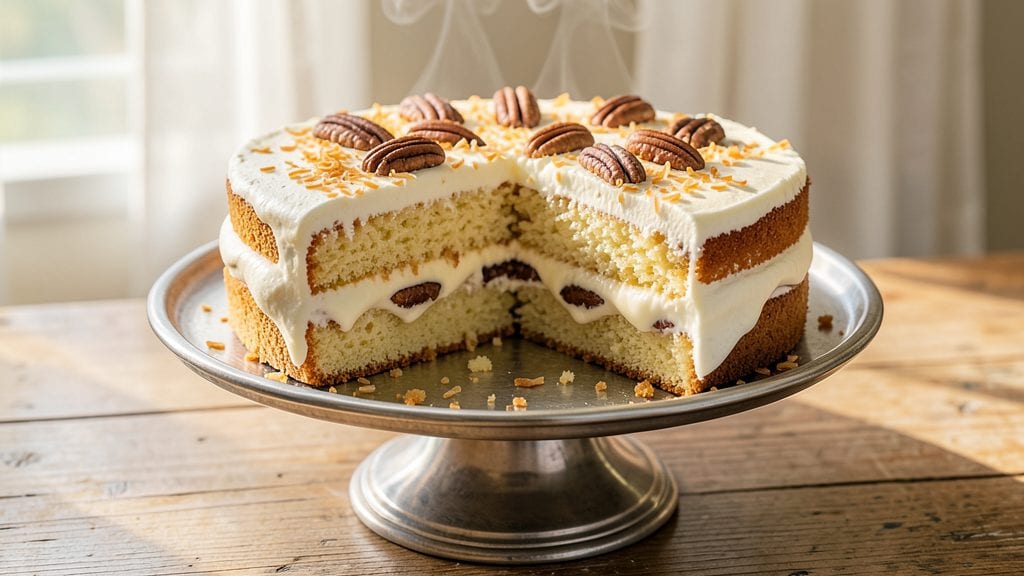
This old-fashioned white German chocolate cake recipe delivers the classic combination of moist vanilla cake, rich chocolate layers, and toasted pecan-coconut swirls that became a Southern staple.
The secret lies in precise layering and a slow bake that creates that signature tender crumb with just the right amount of density—something I perfected after testing dozens of variations over the years.
That first slice, with its delicate swirls and perfect balance of sweetness, always brings back memories of family gatherings where this cake was the centerpiece.
The cake itself is a two-layer vanilla sponge, infused with just enough vanilla bean to create that signature aroma, while the filling combines melted white chocolate with toasted pecans and sweetened shredded coconut for that signature crunchy-sweet contrast.
What makes this version truly special is the technique of swirling the filling between layers before baking, which creates those beautiful marbled patterns while keeping the cake moist. The vanilla buttercream frosting ties everything together with its smooth, creamy finish that complements rather than overpowers the cake's natural flavors.
When baked correctly, you'll end up with a cake that's light yet substantial—never dry or overly sweet. The toasted pecans add a subtle nutty depth, while the coconut brings a delicate tropical note that balances the richness of the white chocolate.
The frosting isn't just decoration; it's the final layer of flavor that makes each bite perfect. This is the kind of cake that disappears quickly at gatherings, leaving only crumbs and happy memories behind.
Whether you're baking for a special occasion or just treating yourself, this recipe delivers restaurant-quality results with simple ingredients and straightforward techniques. The key is patience—letting the cake cool completely before frosting ensures clean layers and professional-looking swirls.
Let's get started on creating this timeless dessert that's been a favorite for generations.
Ingredients for old fashioned white german chocolate cake
Classic cake ingredients with a Southern twist—vanilla, chocolate, and nutty crunch combine perfectly.
| Ingredient | Amount | Notes |
|---|---|---|
| All-Purpose Flour 🌾 | 3 cups | Sifted for even texture |
| Granulated Sugar 🍚 | 2 ½ cups | White sugar preferred |
| Unsalted Butter 🧈 | 1 ½ cups | Room temperature, cubed |
| Large Eggs 🥚 | 6 whole | Room temperature for blending |
| Vanilla Extract 🍯 | 2 tsp | Pure vanilla extract preferred |
| Baking Powder 🧂 | 2 tsp | Aluminum-free preferred |
| Salt 🧂 | ½ tsp | Fine sea salt preferred |
| White Chocolate Bars 🍫 | 12 oz | High-quality white chocolate |
| Pecans 🥜 | 1 ½ cups | Chopped, toasted lightly |
| Sweetened Shredded Coconut 🥥 | 1 cup | Unsweetened can be substituted |
| Vanilla Bean Paste 🍯 | 1 tbsp | For enhanced vanilla flavor |
| Powdered Sugar 🍚 | 4 cups | For buttercream frosting |
| Heavy Cream 🥛 | 1 ½ cups | Cold for buttercream |
The quality of your chocolate and nuts makes all the difference. For the white chocolate, Guittard or Ghirardelli bars melt beautifully—avoid the waxy varieties that can make the filling grainy. Pecans should be toasted just until fragrant, not burnt; Trader Joe's or Costco often have pre-toasted options, but toasting your own at 350°F for 8-10 minutes gives better flavor. The vanilla bean paste adds depth that regular extract can't match—Madagascar or Tahitian varieties work best. For the flour, King Arthur or Gold Medal brands are consistent choices that yield a tender crumb. Always sift your dry ingredients to prevent dense layers.
No vanilla bean paste? Double the vanilla extract—though you'll miss the subtle speckled texture. Running short on white chocolate? High-quality white baking chocolate works in a pinch, but it has a slightly different melt. The coconut can be swapped for toasted coconut flakes if you prefer more texture, though sweetened shredded gives that signature Southern sweetness. For the buttercream, European-style butter like Plugrá creates a smoother finish. If you're making this ahead, the cake layers can be baked and stored separately for up to 2 days before assembly—just bring them to room temperature before frosting.
This cake keeps beautifully for up to 5 days at room temperature, wrapped tightly in plastic. For longer storage, freeze the fully frosted cake for up to 3 months—thaw overnight in the fridge before serving. The buttercream can be made a day ahead and stored in the fridge, then whipped briefly to smooth it out before use. The filling mixture (white chocolate, pecans, and coconut) can be prepped and refrigerated for 3 days, though it's best used fresh for optimal texture. Always let the cake cool completely before frosting to prevent melting.
Why You'll Love This Recipe
- No-Fuss Mixing: I swear by this recipe’s simplicity—just cream butter and sugar, crack eggs, and fold in flour. No sifting, no fancy techniques, just a bowl, a whisk, and maybe a spatula. My kids help me measure the flour, and it still comes out perfect.
- Vanilla Butter Bliss: That rich, buttery vanilla flavor? It’s the star. The butter’s not just melted—it’s whipped into the batter, giving every bite a luxurious, almost custardy richness. Honestly, I’ve tried store-bought white cake mixes, but this beats them hands down.
- Double-Duty Cake: This isn’t just dessert—it’s my go-to for breakfast cakes (yes, even on a Tuesday night) or a quick make-ahead treat for potlucks. Slice it thin for sandwiches, or serve it whole with whipped cream. It’s that versatile.
- Budget-Friendly Luxury: All the good stuff—real butter, fresh eggs, vanilla—without breaking the bank. A single batch feeds six, and leftovers? They last days in the fridge, wrapped tight. My secret weapon for when I want to feel fancy but keep it simple.
Step-by-step instructions for white German chocolate cake
This classic recipe delivers moist layers, rich white chocolate flavor, and signature toasted pecan-coconut swirls.
Prepare the Toasted Pecan-Coconut Filling
Preheat your oven to 350°F and spread the 1.5 cups pecans and 1 cup sweetened shredded coconut on a baking sheet. Toast for 8-10 minutes until the pecans are fragrant and the coconut is golden, stirring halfway. Remove from oven and let cool completely—this prevents the filling from becoming greasy when mixed later.
While still warm, transfer the toasted mixture to a food processor and pulse until finely chopped but still slightly textured. Add 1 tablespoon vanilla bean paste and pulse again to distribute. Set aside—this aromatic mixture will create the cake's signature swirls and add depth to each bite.
Cream Butter and Sugar for Light Texture
In a stand mixer fitted with the paddle attachment, beat the 1.5 cups unsalted butter and 2.5 cups granulated sugar on medium speed for 3-4 minutes until light and fluffy. You'll notice the mixture nearly doubles in volume and becomes pale—the air incorporated here creates the cake's tender crumb. Scrape down the sides of the bowl to ensure even mixing.
Add the 6 whole large eggs, one at a time, mixing well after each addition. Then add 2 teaspoons vanilla extract and mix for another 30 seconds. This step builds the cake's structure while incorporating rich egg flavor. The mixture should be smooth and slightly thickened but still pourable.
Combine Dry Ingredients and Fold in Filling
In a separate bowl, whisk together the 3 cups all-purpose flour, 2 teaspoons baking powder, and 0.5 teaspoon salt. Sift the mixture directly into the wet ingredients and mix on low speed until just combined—you should still see some flour streaks. Overmixing develops gluten and makes the cake dense.
Reduce mixer speed to low and add half of the toasted pecan-coconut mixture. Mix just until incorporated, then fold in the remaining pecan mixture by hand with a spatula. This creates the signature swirls while maintaining a tender texture. The filling should be evenly distributed but still visible in streaks.
Melt White Chocolate for Moisture and Flavor
While preparing the batter, melt the 12 ounces white chocolate bars in a double boiler or microwave in 30-second intervals, stirring between each until completely smooth. Let cool slightly to 110°F—this ensures it doesn't cook the cake batter when added. The melted chocolate adds moisture and rich flavor while keeping the cake tender.
With the mixer on low speed, gradually add the melted white chocolate to the batter, mixing just until fully incorporated. The batter will be thick but still spreadable. Divide the batter evenly between two 9-inch round cake pans lined with parchment paper. Bake at 350°F for 25-30 minutes or until a toothpick inserted comes out clean.
Prepare Vanilla Buttercream and Assemble
In a stand mixer fitted with the whisk attachment, beat the 1.5 cups cold heavy cream until soft peaks form. Gradually add the 4 cups powdered sugar and mix on medium speed until smooth. Add 1 teaspoon vanilla extract and mix for another 2 minutes until fluffy and light. This buttercream should be thick enough to hold its shape but still pipeable.
Level the cooled cake layers and place the first layer on a serving plate. Spread a generous layer of buttercream, then add the second layer. Frost the entire cake with remaining buttercream, creating a smooth finish. Chill for 1 hour before slicing—this allows the frosting to set properly and makes clean cuts possible.
Pro Tips For Making Old Fashioned White German Chocolate Cake
- Cream Butter Slowly: Dump cold butter straight into the flour mix and you’ll end up with a lumpy mess. Beat the butter and sugar together first until it’s light and fluffy—about 3-4 minutes with an electric mixer—before adding anything else. This isn’t just about texture; it’s what makes the cake tender instead of dense.
- Sift That Flour: I learned this the hard way—skipping the sift leaves pockets of air in the batter that make the cake rise unevenly. Use a fine-mesh sieve for the flour, and tap the measuring cup against the counter to settle it. Yes, it’s an extra step, but the crumb will be noticeably smoother.
- Room-Temp Eggs Matter: Cold eggs? They’ll sink like stones in your batter and create a heavy, uneven texture. Take them out of the fridge at least 30 minutes before mixing—just set them in a bowl of warm water if you’re in a rush. Warm eggs blend in seamlessly and give that classic German cake lift.
- Don’t Overmix the Batter: Once the flour hits the wet ingredients, stop mixing the second everything is just combined. Overmixing develops gluten, and that’s how you get a tough, chewy cake instead of the light, melt-in-your-mouth crumb you’re after. Use a spatula to fold in the last bit if needed.
Common mistakes when making perfect results
Overmixing the Batter
The single biggest mistake I see is overmixing the batter after adding the dry ingredients. Once you've combined the flour, baking powder, and salt with the wet mixture, stop mixing as soon as you see just a few streaks of flour remaining.
Overmixing develops gluten, which creates a tough, dense cake instead of the tender crumb you want. I've ruined many cakes by continuing to mix until smooth—remember, a few lumps are normal and will disappear during baking. 💡
Skipping the Cooling Step
Many bakers rush to frost their cake immediately after removing it from the oven. This is a recipe for disaster—the heat from the cake will melt your buttercream before it has a chance to set properly.
Always let your cake cool completely in the pan for at least 1 hour, then transfer to a wire rack to cool another 1-2 hours. This patience ensures clean layers and prevents a soggy bottom. I've learned this the hard way when eager guests appeared early!
Incorrect Chocolate Temperature
Using white chocolate that's too hot when adding it to the batter can cause the cake to cook unevenly or even curdle. The chocolate should be melted to 110°F—any hotter and it will cook the eggs in your batter.
I recommend melting in 30-second intervals in the microwave, stirring between each, or using a double boiler. Test the temperature with a candy thermometer if you're unsure. Room-temperature chocolate that's too cool won't melt properly, so always warm it gently first. 🌡️
Uneven Filling Distribution
The swirled pecan-coconut filling needs to be distributed evenly between layers, but many bakers either underfill or overfill. Use about ½ cup of filling per layer—spread it in the center of each cake round, then gently swirl it with a knife before adding the next batter layer.
This creates those beautiful marbled patterns while keeping the filling concentrated in the center where it belongs. I measure my filling precisely to avoid any surprises when slicing.
Improper Pecan Toasting
Toasted pecans should be fragrant but not burnt—they'll overpower the cake's delicate flavors if cooked too long. Toast at 350°F for 8-10 minutes, stirring halfway, until they're golden and smell amazing. Watch closely after 7 minutes as they can go from perfect to burnt in seconds.
Let them cool completely before processing—the residual heat will make your filling greasy. I always set a timer and check frequently to avoid this common mistake. 🥜
Frosting Too Soon
Even after the cake has cooled, many bakers frost it too soon after assembly. The buttercream needs time to set properly on the cake's surface. After frosting, place your cake in the refrigerator for at least 1 hour before slicing.
This chilling time allows the frosting to firm up, making clean slices possible. I've seen beautiful cakes ruined by impatient guests taking slices too early—always let it rest! ⏰
Nutrition facts
Frequently asked questions
Why does this cake have white chocolate instead of dark?
Traditional German chocolate cake uses white chocolate to create a delicate, creamy flavor that pairs perfectly with the toasted pecans and coconut. The white chocolate adds moisture while keeping the cake's sweetness balanced—dark chocolate would overpower the subtle nutty and tropical notes. This version stays true to the classic Southern interpretation where white chocolate became the signature ingredient.
Can I make this cake without a stand mixer?
Use a hand mixer for the butter-sugar mixture and eggs, and whisk all other ingredients by hand. For the buttercream, beat the heavy cream with a hand mixer until soft peaks form, then gradually add powdered sugar. The key is patience—mix the wet ingredients thoroughly and fold the dry ingredients just until combined to maintain that tender texture.
How do I store leftover cake?
Wrap tightly in plastic wrap and store at room temperature for up to 5 days. For longer storage, freeze the fully frosted cake for up to 3 months. Thaw overnight in the fridge before serving. The buttercream can be made a day ahead and refrigerated, then whipped briefly before use. The cake itself keeps well for 2 days unbaked if stored in airtight containers.
What's the best way to serve this cake?
This cake is perfect for special occasions like birthdays, holidays, or family gatherings. Serve at room temperature with a dollop of whipped cream or a scoop of vanilla ice cream to enhance the flavors. For a festive touch, sprinkle crushed pecans or toasted coconut on top before serving. The rich combination works beautifully with coffee or tea as well.
Can I substitute the vanilla bean paste?
Yes! If you don't have vanilla bean paste, double the vanilla extract to 4 teaspoons. For even better flavor, add 1 teaspoon vanilla sugar (vanilla extract absorbed into sugar) to the dry ingredients. While vanilla bean paste adds those beautiful speckles and deeper flavor, this substitution still delivers excellent results.