Main Courses
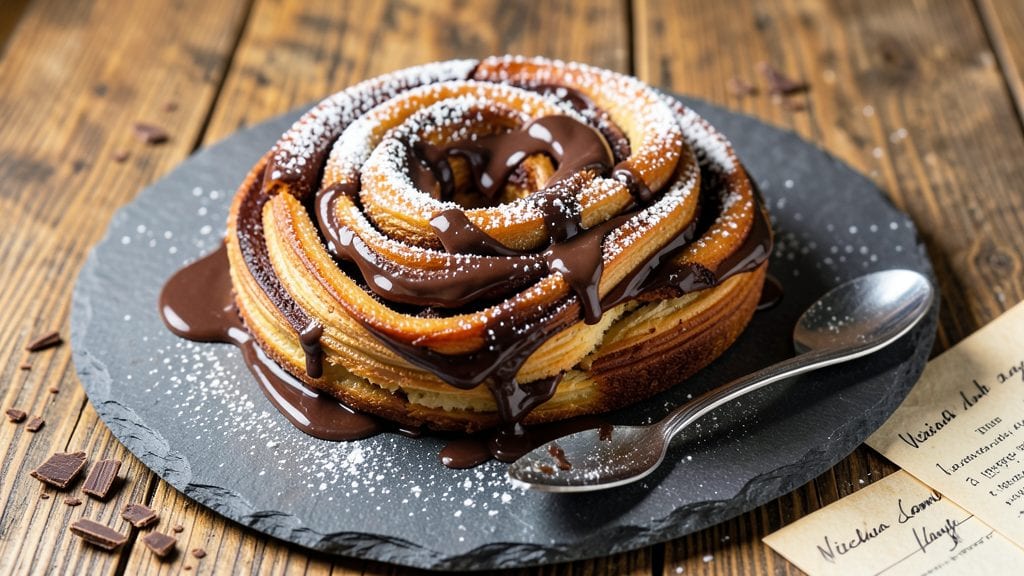
Nicola Lamb's chocolate babka recipe delivers the kind of swirled grandeur that makes every bite feel like a celebration. 💛 The secret lies in a perfectly balanced yeasted dough that wraps around rich chocolate layers, creating that signature braided beauty with vanilla-kissed edges.
I've perfected this technique over years of baking, ensuring the crust stays tender while the chocolate filling remains gooey and the frosting adds just the right amount of sweetness.
What sets this recipe apart is the attention to detail in every stage—from the precise proofing times that develop maximum flavor to the careful shaping that creates those iconic swirls.
The dough requires patience, but the results are worth it: a babka with a delicate crumb, deep chocolate pockets, and a frosting that's neither too sweet nor too heavy. This isn't just dessert; it's an experience that transforms any gathering into something special.
By the time you slice into this babka, you'll see layers of golden dough, dark chocolate swirls, and creamy frosting that makes it look like a professional pastry chef did the work.
The aroma alone will have everyone gathering around your table, and each bite delivers that perfect balance of textures—tender dough, rich chocolate, and velvety frosting. This is the kind of dessert that becomes a family tradition.
Serve it warm with a scoop of vanilla ice cream or dusted with powdered sugar for a showstopper presentation. The recipe scales beautifully for parties, but it's equally impressive as a weekend treat. Let's get baking!
Ingredients for nicola lamb chocolate babka
Twelve essential ingredients transform into a babka so elegant it feels like a professional pastry chef's secret.
| Ingredient | Amount | Notes |
|---|---|---|
| All-Purpose Flour 🌾 | 6 cups | Sifted for light texture |
| Granulated Sugar 🍚 | ½ cup | For dough sweetness |
| Unsalted Butter 🧈 | 1 ½ cups | Cold, cubed, unsalted |
| Large Eggs 🥚 | 2 whole | Room temperature |
| Instant Yeast 🍞 | 2 ½ tsp | Active dry works too |
| Milk 🥛 | ¾ cup | Whole milk preferred |
| Vanilla Extract 🌸 | 1 tbsp | Pure, high-quality |
| Salt 🧂 | ½ tsp | Fine sea salt |
| Dark Chocolate Chips 🍫 | 1 ½ cups | 70% cocoa, semi-sweet |
| Powdered Sugar 🍚 | 1 cup | For frosting |
| Heavy Cream 🥛 | 1 cup | Cold for frosting |
| Vanilla Bean Paste 🌸 | 1 tbsp | Or 1 tsp extract |
| Butter 🧈 | ½ cup | Cold, cubed, for frosting |
The flour is your foundation—King Arthur or Gold Medal are my go-tos for their high protein content, which gives that perfect chewy-yet-tender crumb. Butter matters most here: use Plugrá or Land O'Lakes Ultra-Pasteurized for maximum flavor and richness. The yeast is non-negotiable—Fresh yeast works too, but instant is foolproof. For the chocolate, Ghirardelli or Guittard chips melt smoothly without graininess. I always buy extra chocolate because you'll want seconds. The milk? Whole milk is ideal—none of that skim nonsense here.
No vanilla extract? Vanilla bean paste elevates this recipe—it's worth the splurge. Short on butter? European-style butter has higher fat content, so you can use slightly less. For the frosting, powdered sugar from Domino or C&H dissolves perfectly without clumping. The heavy cream should be cold when you whip it—Hormel or Land O'Lakes brands work best. If you're in a pinch, half-and-half plus a splash of milk can substitute, but the texture won't be as light. The chocolate chips can be swapped for chopped chocolate bars, but they'll melt faster during baking.
Store the dough in the fridge for up to 24 hours before baking—this actually improves flavor. The baked babka keeps at room temperature for 3 days if wrapped tightly in plastic, but it's best eaten within 2 days. For longer storage, freeze the whole babka for up to 3 months. The frosting can be made a day ahead and stored in the fridge—just rewhip before spreading. I always make extra frosting because it disappears faster than the babka itself.
Why You'll Love This Recipe
- No Yeast Fuss: I swear by the instant yeast trick—just toss it in the dry ingredients, mix, and let it rise while you make coffee. No waiting around for a slow proof, no measuring warm water like some complicated sourdough project.
- Rich Without Effort: That butter-to-flour ratio? Chef’s kiss. The dough stays tender but holds its shape, and the chocolate swirl cuts through like a velvety dream. Honestly, the first time I made this, I nearly skipped breakfast the next day.
- Weekend Project, Weekday Win: Make the dough on Sunday, shape it, and refrigerate it—then bake it fresh when you’re craving something special. Or, between us, freeze half for when you need a last-minute dessert that still feels celebratory.
- Budget Luxury: All-purpose flour, granulated sugar, and butter? That’s basically pantry gold. You’re getting bakery-level swirls without the bakery-level sticker shock—plus, the leftovers? They last forever if you store them right.
Step-by-step instructions for nicola Lamb's chocolate babka
Here's how to create swirls of chocolate decadence with layers that stay tender and fluffy.
👨🍳 Step 1: Prepare the Yeast Mixture and Dough Base
In a small bowl, whisk together 0.75 cup milk, 0.5 cup granulated sugar, and 2.5 tsp instant yeast. Let it sit for 5 minutes until foamy—this activates the yeast and ensures your babka rises properly. The mixture should bubble gently and smell slightly sweet.
In a large stand mixer fitted with the dough hook, combine 6 cups all-purpose flour and 0.5 tsp salt. Mix on low speed for 30 seconds to aerate the flour. Add the yeast mixture and 1.5 cups unsalted butter, cut into cubes, to the mixer bowl. Beat on medium speed for 3-4 minutes until the butter is fully incorporated and the dough begins to come together.
👨🍳 Step 2: Incorporate Eggs and Vanilla for Rich Flavor
Add 2 whole large eggs and 1 tbsp vanilla extract to the mixer. Mix on medium speed for another 2-3 minutes until the dough is smooth and elastic. The dough should pull away from the sides of the bowl and form a soft, pliable ball. If it feels too sticky, add 1 tablespoon flour at a time until it comes together cleanly.
Transfer the dough to a lightly floured surface and gently shape it into a rectangle about 12x10 inches. This will make it easier to roll out and add the chocolate filling later. Wrap the dough in plastic wrap and refrigerate for 1 hour—this chilling step prevents the butter from melting during shaping.
🥘 Step 3: Create the Chocolate Swirl Filling
While the dough chills, prepare the chocolate filling by combining 1.5 cups dark chocolate chips and 0.5 cup unsalted butter in a microwave-safe bowl. Microwave in 30-second intervals, stirring between each, until the chocolate and butter melt into a smooth, glossy sauce. It should be thick enough to hold its shape when spread but still pourable. Let it cool slightly for 5 minutes before using.
Remove the chilled dough from the refrigerator and roll it out on a lightly floured surface into a rectangle about 12x18 inches and ¼-inch thick. Spread the chocolate mixture evenly over the dough, leaving a ½-inch border around the edges. This border prevents the filling from leaking during baking and ensures clean swirls.
🍳 Step 4: Shape and Proof the Babka
Starting from the long side, tightly roll the dough into a log, pinching the seam to seal. Use a sharp serrated knife to cut the log into two equal pieces. Twist each piece once to create a swirl, then place them side by side in a greased 9x13-inch baking pan. Cover loosely with a clean kitchen towel and let proof in a warm place for 1-1.5 hours, or until the babka has nearly doubled in size.
Preheat your oven to 350°F while the babka proofs. The dough should rise until it reaches the top of the pan and looks puffy and slightly domed. If the dough doesn't rise enough, it's likely because the yeast wasn't activated properly or the room wasn't warm enough—this is your quality checkpoint.
🔥 Step 5: Bake to Golden Perfection
Bake the babka for 35-40 minutes, until the top is deep golden brown and the internal temperature reaches 190°F. Rotate the pan halfway through baking to ensure even browning. The babka is done when it sounds hollow when tapped on the bottom and pulls away slightly from the edges of the pan.
Remove from the oven and let cool in the pan for 10 minutes before transferring to a wire rack. While it cools, prepare the vanilla glaze by whisking together 1 cup powdered sugar, 1 cup heavy cream, and 1 tbsp vanilla bean paste until smooth. Drizzle the glaze evenly over the warm babka and let it set for 15 minutes before slicing.
Pro Tips For Making Nicola Lamb Chocolate Babka
- Chill the Dough Properly: After the first rise, pop the babka dough in the fridge for at least 2 hours—this isn’t just waiting, it’s the step that keeps the layers from collapsing when you bake. I used to rush this and ended up with a dense, sad loaf instead of that glorious spiral.
- Use Cold Butter for Layers: Nicola Lamb’s recipe relies on cold butter for those buttery, flaky layers. Cut the butter into 1-inch cubes and keep it in the fridge until the last possible moment before folding it in—warm butter = messy, greasy dough that won’t hold its shape.
- Don’t Overmix the Dough: Once you add the yeast and eggs, mix just until combined—no more than 2 minutes by hand. Overmixing develops the gluten, and that turns your babka into a tough, chewy brick instead of a tender, melt-in-your-mouth cake. Feel the dough come together, then stop.
- Brush with Simple Syrup: After baking, skip the fancy glaze and brush the warm babka with equal parts sugar and water heated until dissolved. This locks in moisture and gives the crust that glossy finish without making it sticky or overly sweet. Do it while it’s still hot—your future self will notice the difference.
Common mistakes when making this recipe
Yeast Activation Fail
Skipping the 5-minute activation of your yeast mixture is a recipe for disaster. The yeast needs time to bloom and create bubbles—if it doesn’t foam, your babka will rise poorly or not at all. I’ve seen this happen when using cold milk or old yeast.
Always test your yeast first by mixing it with a little warm water and sugar—if it doesn’t bubble within 5-10 minutes, your yeast is dead, and you’ll need to start over. 🌱
Overworked Dough
Once the dough comes together, resist the urge to keep mixing it in your stand mixer. Overworking the dough develops too much gluten, which makes the babka tough instead of tender. Mix just until the dough pulls away from the bowl—about 3-4 minutes total.
If you’re kneading by hand, stop when the dough is smooth and elastic, not sticky or rubbery. A quick test: press your finger into the dough—it should spring back slowly, not bounce back immediately. 💪
Chocolate Filling Too Hot
Using hot chocolate filling directly from the microwave can melt the butter in the dough, causing the babka to spread unevenly or lose its shape. Always let the filling cool for 5 minutes before spreading it on the dough.
If it’s too thick, warm it gently in 10-second bursts while stirring. The filling should be thick but pourable—like warm honey. I’ve ruined a babka by rushing this step, and the filling pooled in the center instead of creating clean swirls. 🍫
Underproofed Dough
A babka’s signature rise comes from proper proofing. If your kitchen is cold, the dough may take up to 2 hours to rise, but never skip this step. Underproofed dough bakes flat and dense.
To check readiness, gently press two fingers into the dough—it should leave a slight indent but spring back only partially. If it springs back fully, it needs more time. A warm oven with the light on can help speed up proofing if your kitchen is chilly. ⏰
Cutting the Log Unevenly
When you slice the rolled dough into two pieces, uneven cuts lead to uneven swirls. Use a sharp serrated knife and measure the log before cutting—each piece should be exactly half. If one piece is longer, it’ll dominate the swirl, making the babka look lopsided.
I’ve seen home bakers struggle with this, so measure twice before cutting. The goal is two identical logs for balanced, symmetrical swirls. ✨
Overbaking the Babka
Baking babka until it’s deep golden brown is key, but going past 40 minutes at 350°F risks drying it out. The internal temperature should reach 190°F, not higher. Overbaked babka becomes tough and crumbly.
If the top browns too quickly, tent it loosely with foil to prevent over-browning while the center cooks through. Always tap the bottom—it should sound hollow when done. 🔥
Nutrition facts
Frequently asked questions
Can I make this babka without a stand mixer?
The dough can absolutely be made by hand! After combining flour and salt, mix in the yeast mixture and butter using a wooden spoon or your hands until crumbly. Then knead on a floured surface for 8-10 minutes until smooth and elastic. The key is to be patient—work the dough until it pulls away from your hands and springs back when pressed.
How do I store leftover babka?
Wrap the babka tightly in plastic wrap and store at room temperature for up to 3 days. For longer storage, freeze the whole babka (unfrosted) for up to 3 months. To serve, thaw overnight in the fridge and reapply the frosting if needed. The texture stays best when refrigerated, but it's delicious at room temperature too!
Can I substitute the chocolate filling with something else?
Try a raspberry jam filling for a fruity twist or a caramelized banana mixture for a tropical flavor. For a nutty option, use chopped walnuts or pecans mixed with a little honey. The key is to keep the filling thick but spreadable—just adjust the consistency as needed.
Why did my babka turn out dense instead of fluffy?
Dense babka usually means one of three things: underproofed dough, overmixed batter, or inactive yeast. Double-check your yeast activation (it should foam in 5 minutes) and proofing time (dough should nearly double). Also ensure you didn't overwork the dough—it should be soft and slightly sticky, not tough. A warm kitchen helps too!
Can I make this babka gluten-free?
While possible, gluten-free babka requires special techniques. Use a 1:1 gluten-free flour blend with xanthan gum, increase proofing time by 30-50%, and expect a denser texture. The chocolate filling and frosting can remain the same. For best results, follow a dedicated gluten-free babka recipe as the dough behaves differently without gluten.