
Desserts
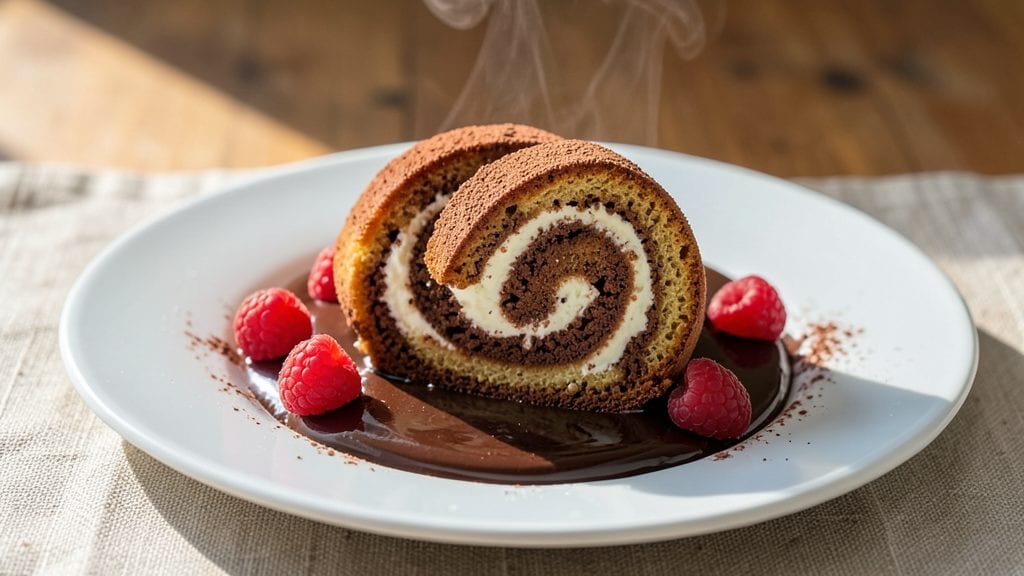
Mastering a chocolate roulade recipe transforms simple baking into an elegant dessert masterpiece—one where crisp sponge layers embrace silky chocolate filling without a single crack.
The secret lies in precise technique: baking the sponge just tender enough to roll, cooling it perfectly, and spreading filling while the cake is still warm and pliable.
I’ve perfected this method after years of trial and error, ensuring every slice reveals those signature layers of rich chocolate and delicate sponge.
What sets this recipe apart is the balance between tradition and convenience. You can start with a homemade sponge for that authentic texture, or use a store-bought sheet cake for a foolproof shortcut—both methods yield impressive results.
The filling, whether classic ganache or lighter buttercream, requires careful timing to coat the sponge evenly without tearing. Chilling the roulade properly is non-negotiable; it’s the difference between a beautifully rolled dessert and a collapsed disaster.
The reward? A dessert that looks like it belongs in a patisserie but can be made in your own kitchen. Each slice reveals layers of velvety chocolate and airy sponge, with edges that stay crisp and clean.
This isn’t just dessert—it’s a showstopper for holidays, dinner parties, or when you want to impress without spending hours in the kitchen. Ready to create something restaurant-worthy? Let’s begin.
For those short on time, modern adaptations like instant pudding filling or pre-made sponges keep the magic alive without sacrificing quality. The key remains the same: patience during cooling, precision in rolling, and confidence in presentation.
Whether you’re a seasoned baker or a beginner eager to try something new, this roulade delivers professional results with a touch of homey charm.
Ingredients for chocolate roulade
Precision ingredients create flawless chocolate roulade layers—where delicate sponge meets velvety filling without a crack in sight.
| Ingredient | Amount | Notes |
|---|---|---|
| All-Purpose Flour 🌾 | 1 ½ cups | Sifted for light texture |
| Granulated Sugar 🍚 | 1 ½ cups | Superfine preferred for smoothness |
| Unsalted Butter 🧈 | 1 cup | Room temperature, European-style preferred |
| Large Eggs 🥚 | 4 whole | Room temperature, separated |
| Vanilla Extract 🌿 | 1 tbsp | Pure Madagascar preferred |
| Baking Powder 🧂 | 1 ½ tsp | Aluminum-free for neutral flavor |
| Salt 🧂 | ½ tsp | Fine sea salt |
| Dark Chocolate 🍫 | 8 oz | 70% cacao, chopped fine |
| Heavy Cream 🥛 | ½ cup | Full-fat for richness |
| Powdered Sugar 🍚 | 1 cup | For dusting |
| Unflavored Gelatin 🍬 | 1 tsp | Bloomed in 2 tbsp cold water |
| Lemon Juice 🍋 | 1 tsp | Freshly squeezed |
| Whole Milk 🥛 | 2 tbsp | For gelatin mixture |
| Parchment Paper 📄 | 1 sheet | For baking and rolling |
The sponge's success hinges on European-style butter—its higher fat content yields a tender crumb. Plugrá or President brands excel, but any high-fat butter works. For the chocolate, Valrhona or Lindt 70% cacao deliver that signature depth; avoid milk chocolate, which can overpower. The gelatin requires blooming in cold water—never heat it directly, or it’ll seize. Sift the flour and baking powder together to eliminate lumps, ensuring an even rise. Room-temperature eggs prevent dense cake, so let them sit out for 30 minutes before using. Superfine sugar dissolves more smoothly, but pulse regular granulated sugar in a food processor if needed.
No European butter? Planter's or Land O'Lakes suffice in a pinch, though texture may differ slightly. Substituting dark chocolate? 60% cacao minimum—lower percentages risk a grainy texture. Short on gelatin? 1 tbsp powdered pectin works as a substitute, though results may vary. The lemon juice brightens the filling, but orange zest adds a lovely twist if you prefer citrus notes. For a lighter filling, replace half the heavy cream with Greek yogurt—just be prepared for slightly less shine. Always use powdered sugar for dusting, not granulated; it dissolves instantly for that professional finish.
Store the sponge at room temperature in an airtight container for up to 2 days—it stays fresh longer than you’d think. The filled roulade holds in the fridge for 3 days, though it’s best enjoyed within 24 hours. For make-ahead convenience, assemble the roulade unrolled, wrap tightly in plastic, and chill overnight. When ready to serve, unroll it gently—never force it—and slice with a hot, damp knife for clean cuts. Leftovers? Reheat slices in the oven at 300°F for 5-7 minutes to restore crispness.
Why You'll Love This Recipe
- No-Fuss Layers: I swear, this roulade only needs a bowl, a whisk, and 20 minutes of your time—no fancy equipment, no stress. Just fold the warm batter, sprinkle that sugar-butter mix, and roll while it’s still hot. (Yes, even if you’re not a baker.)
- Rich Without Effort: That first bite of melted chocolate filling, still warm and gooey, with the vanilla-infused cake? It’s like dessert but feels like a hug. The butter and sugar caramelize just enough to make it taste homemade—no box mix here.
- Weeknight or Wow Factor: Serve it sliced for breakfast with coffee, or roll it up like a fancy dessert for guests. Honestly, I’ve used it for both—no judgment if you eat the whole thing yourself. (Between us, I have.)
- Leftovers? More Like Leftovers Loved: This keeps beautifully for days, so you can bake once and enjoy it all week. The cake stays moist, the chocolate stays rich, and I’ve even reheated slices in the microwave—no one ever knows the difference. Budget win.
Step-by-step instructions for chocolate roulade recipe
Mastering this classic requires precision and patience—here's how to achieve perfectly rolled layers every time.
Prepare the Swiss Roll Batter
Preheat your oven to 350°F and line a 10x15-inch jelly roll pan with the parchment paper, leaving an overhang on two long sides. In a stand mixer fitted with the paddle attachment, cream together the 1 cup unsalted butter and 1.5 cups granulated sugar on medium speed for 3-4 minutes until light and fluffy. This step is critical—you want to incorporate maximum air for a tender crumb.
Add the 4 whole large eggs one at a time, mixing well after each addition. Then incorporate the 1 tbsp vanilla extract, followed by the sifted 1.5 cups all-purpose flour, 1.5 tsp baking powder, and 0.5 tsp salt. Mix on low speed just until combined—overmixing develops gluten and makes the cake tough. The batter should be smooth and slightly thick, like heavy pancake batter.
Bake the Cake and Prepare the Filling
Pour the batter evenly into the prepared pan and spread it into the corners with a spatula. Bake for 12-14 minutes until the top springs back when gently pressed and a toothpick inserted comes out clean. Immediately invert the cake onto a clean kitchen towel dusted with powdered sugar—this prevents sticking and creates a smooth surface.
While the cake cools slightly, prepare the chocolate filling by melting the 8 oz dark chocolate and 0.5 cup heavy cream together in a heatproof bowl over simmering water, stirring until smooth. Remove from heat and stir in the 1 tsp lemon juice and 1 tsp unflavored gelatin that has been bloomed in 2 tbsp whole milk warmed separately. The filling should be glossy and thick enough to coat the back of a spoon.
Spread and Roll the Roulade
Once the cake has cooled to room temperature (about 15-20 minutes after inverting), carefully peel away the parchment paper. Spread the chocolate filling evenly over the cake surface, leaving a ½-inch border uncovered. The filling should be spread to within ¼ inch of the edges to prevent filling from oozing out during rolling.
Using the towel to help with grip, begin rolling the cake tightly from the long side, using the towel to press gently as you roll. The goal is to create a compact cylinder—this is where precision matters most. As you roll, tuck in the sides to maintain an even shape. Once fully rolled, transfer to a serving plate and chill in the refrigerator for at least 2 hours to set completely.
Slice and Serve
Before serving, dust the roulade generously with additional powdered sugar through a fine-mesh sieve. This creates that signature snowy appearance and prevents sticking. Using a sharp serrated knife, cut the roulade into 1-inch slices at an angle for dramatic presentation. Each slice should reveal the rich chocolate filling perfectly encased between layers of tender cake.
Serve immediately while the cake is still slightly warm from cutting. The contrast between the delicate cake layers and the velvety chocolate filling makes this dessert truly exceptional. For best results, serve at room temperature with a dusting of powdered sugar and a few fresh berries on the side.
Pro Tips For Making Chocolate Roulade
- Preheat Pan to 350°F: The oven’s too hot or too cool, and your roulade will either bake unevenly or collapse. Use an oven thermometer—mine’s always run 25°F hotter than the dial. Preheat for 15 minutes, then bake at 350°F the whole time for a perfectly set center without burning the edges.
- Melt Butter Slowly: Dumping cold butter into hot sugar makes lumps that never dissolve. Microwave the butter in 10-second bursts, stirring between each, until it’s just liquid—not steaming. This keeps your batter smooth and prevents dry patches in the cake.
- Don’t Overmix the Batter: I used to beat the eggs and flour into submission, thinking more mixing = better texture. Wrong. Mix just until combined—lumpy is fine—then fold in the melted butter gently. Overmixing makes the cake dense and tough, and no one wants a brick for dessert.
- Grease the Pan and Dust with Flour: Butter alone won’t cut it—your roulade will stick like glue. Brush the pan with melted butter, then dust with flour, tapping out the excess. This ensures a clean release, even if you’re rolling the batter thin. (Yes, even if you’re impatient like me.)
Dietary considerations for these flavors
Gluten-Free Adaptations
For a gluten-free version, replace the all-purpose flour with a 1:1 gluten-free baking flour blend like King Arthur Measure for Measure or Bob's Red Mill. Add ½ tsp xanthan gum to help bind the cake—this is critical for preventing cracks during rolling.
I’ve found that gluten-free sponges bake slightly faster, so check for doneness at 10 minutes and reduce oven temperature to 325°F if needed. 🌾
Dairy-Free Options
Swap the butter for Earth Balance vegan butter or Miyoko’s creamery cultured butter, both of which work well in baking. For the filling, use full-fat coconut cream instead of heavy cream and ensure your chocolate is dairy-free (look for brands like Enjoy Life or Hu Kitchen).
The gelatin in the filling can be replaced with agar-agar powder—use ½ tsp agar-agar bloomed in 2 tbsp cold water—for a plant-based alternative. Chill the roulade for an extra 30 minutes to help the filling set properly.
Lower-Sugar Versions
Reduce the granulated sugar to 1 cup and replace the remaining ½ cup with monk fruit sweetener or erythritol for a lower-glycemic option. The sponge will still be tender, but the filling benefits from a touch of sweetness—cut the powdered sugar dusting to ½ cup to balance flavors.
I’ve also had success using unsweetened applesauce (replace ¼ cup butter with ¼ cup applesauce) to lighten the cake without sacrificing moisture. 🍚
Nut-Free Considerations
This recipe is naturally nut-free, but always double-check your chocolate and gelatin brands for cross-contamination warnings. If you’re concerned, opt for certified nut-free dark chocolate like Lindt Nut-Free or Ghirardelli 70% Cacao.
For extra safety, prepare the filling in a separate bowl and use clean utensils to avoid any accidental exposure. The gelatin mixture can also be made in a dedicated pot if you’re sharing the kitchen with nut allergies.
Egg-Free Substitutes
Replace the eggs with a flax egg mixture—combine 1 tbsp ground flaxseed with 3 tbsp water per egg and let it thicken for 5 minutes before using. For the filling, ensure your gelatin is egg-free (most brands are, but check labels).
The sponge will be slightly denser, so bake it for 1-2 minutes longer and let it cool completely before rolling to prevent tearing. The texture won’t be as light, but the flavor remains rich and satisfying. 🥚
Nutrition facts
Frequently asked questions
Why does my chocolate roulade crack when rolling?
The most common causes are overbaking the sponge or letting it cool too slowly. The cake should be just set when removed from the oven—12-14 minutes at 350°F—and cooled completely on the towel before rolling. If it's still warm, the filling will melt and cause cracks. Also, ensure your filling isn't too close to the edges (½-inch border is ideal).
Can I make this with store-bought sponge cake?
Use a 10x15-inch sheet cake (about 1-inch thick) and bake it yourself for even better results, but pre-made works in a pinch. Choose a light, tender cake—avoid dense pound cakes. Bake the store-bought cake for 5-7 minutes at 350°F to warm it slightly before rolling, which makes it more pliable.
How do I prevent the filling from leaking out?
Leave a ½-inch border around the edges when spreading the filling, and use a spatula to press it gently into the cake—don't overfill. Chill the roulade for at least 2 hours before slicing, and always use a hot, damp knife to cut cleanly. For extra insurance, dust the cake with powdered sugar before spreading the filling to create a barrier.
What’s the best way to store leftover roulade?
Wrap tightly in plastic wrap and store in the fridge for up to 3 days. To revive slices, warm them in the oven at 300°F for 5-7 minutes until the edges crisp up again. For longer storage, freeze slices (unassembled) for up to 1 month—thaw at room temperature before serving.
Can I use buttercream instead of chocolate ganache?
Yes! Swap the ganache for 1 cup buttercream (homemade or store-bought) mixed with ½ cup powdered sugar and 1 tsp vanilla. For stability, add ½ tsp cornstarch to thicken it slightly. Buttercream is easier to work with but may not be as rich as ganache. Chill the roulade an extra 30 minutes to help the filling set.