
Desserts
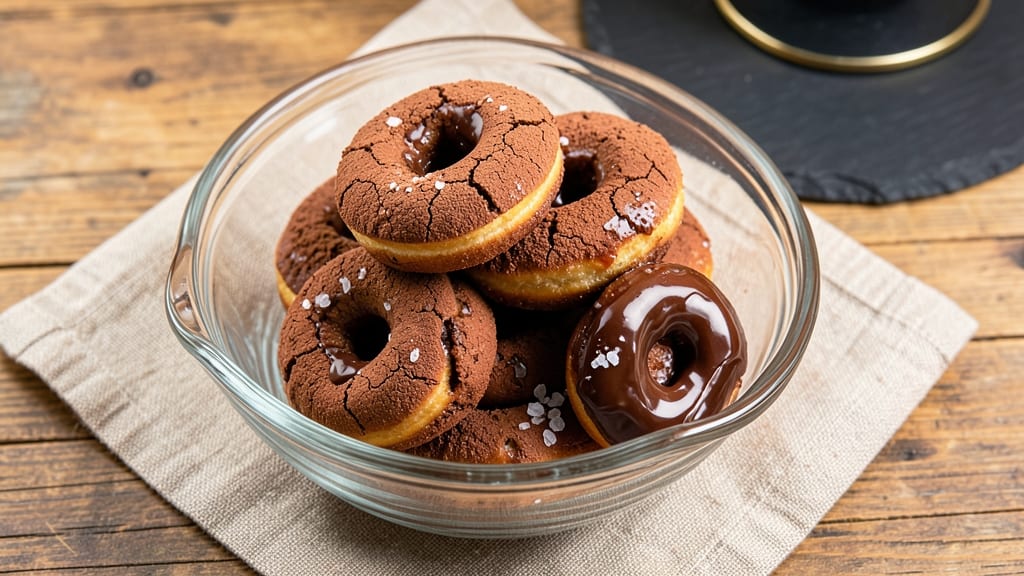
This chocolate old-fashioned donut recipe delivers the perfect balance of yeast-risen richness and velvety cocoa glaze that makes every bite irresistible. The secret lies in a precise dough formula where cocoa powder and melted butter create deep chocolate flavor while maintaining that classic tender yet slightly crisp exterior.
After years of perfecting the frying technique, I've developed a method that ensures donuts cook evenly without absorbing too much oil—resulting in a texture that's light, fluffy, and just sweet enough.
The process begins with an active dry yeast dough that proofed just right—neither too quick nor too slow—before being shaped into classic old-fashioned donuts. Frying at the proper temperature (350°F) is critical; too hot and they brown too fast, too cool and they absorb excess oil.
The real magic happens when these golden donuts cool slightly before being dipped in a thick cocoa glaze that clings beautifully without dripping. This isn't just dessert—it's an experience that transforms any kitchen into a donut shop.
What you'll end up with is a plate of donuts that look like they came from a bakery window: golden-brown with that signature ribbed texture, filled with airy, tender crumb, and coated in a glossy chocolate glaze that melts perfectly with each bite.
The contrast between the warm, slightly crisp exterior and the soft, pillowy interior creates a sensory experience that's hard to resist. These donuts stay fresh for days when stored properly, making them perfect for weekend baking or special occasions.
While this recipe delivers classic results, I've included variations for adjusting sweetness levels and glaze thickness to suit different preferences. The key to success lies in patience—proper proofing, careful frying, and adequate cooling before glazing.
Once you master these techniques, you'll have donuts that rival any bakery's finest. Let's get started on creating these chocolate masterpieces.
Ingredients for chocolate old fashioned donut
Twelve essential ingredients transform your kitchen into a donut shop with classic richness and velvety glaze.
| Ingredient | Amount | Notes |
|---|---|---|
| Active Dry Yeast 🍞 | 2 ¼ tsp | One packet, room temperature |
| Granulated Sugar 🍚 | ½ cup | Divided for dough and glaze |
| Unsalted Butter 🧈 | 1 cup | Melted, cooled to 110°F |
| Large Eggs 🥚 | 2 whole | Room temperature, beaten |
| All-Purpose Flour 🌾 | 4 cups | Sifted, plus extra for dusting |
| Unsweetened Cocoa Powder 🍫 | ½ cup | High-quality, Dutch-processed |
| Salt 🧂 | 1 tsp | Fine sea salt |
| Whole Milk 🥛 | ½ cup | Room temperature |
| Vegetable Oil 🫒 | 4 cups | For frying, 350°F |
| Powdered Sugar 🍚 | 2 cups | For glaze, sifted |
| Heavy Cream 🥛 | ¼ cup | For glaze, cold |
| Vanilla Extract 🌿 | 1 tsp | Pure, high-quality |
| Vegetable Shortening 🧈 | ½ cup | For dough tenderness |
The cocoa powder and butter are non-negotiable for that deep chocolate flavor—Hershey’s Special Dark or Valrhona deliver the best results. For the yeast, Fleischmann’s is reliable, but any active dry yeast works if stored properly in the fridge. The butter must be melted and cooled to 110°F to prevent killing the yeast. If your kitchen runs hot, chill the melted butter in an ice bath. For the flour, King Arthur or Bob’s Red Mill brands ensure consistent texture. The vegetable shortening adds tenderness, so don’t skip it—Crisco is a tried-and-true option. Pre-sift the flour and cocoa powder to avoid lumps in the dough, which can lead to uneven donuts.
No unsweetened cocoa powder? Dutch-processed is ideal, but natural cocoa works in a pinch—just add a pinch of baking soda to the dough for better rise. Short on butter? Olive oil in the same quantity maintains moisture, though the flavor shifts slightly. For the glaze, powdered sugar must be sifted to avoid graininess—Domino or C&H brands work well. The heavy cream adds richness, but half-and-half thinned with a splash of milk creates a similar consistency. If you’re avoiding dairy, coconut cream mimics the texture, though the flavor changes. The vanilla extract should be pure—Nielsen-Massey or McCormick are reliable choices. For frying, vegetable oil is best, but canola oil works too if it’s neutral in flavor.
Store the dough in an airtight container in the fridge for up to 24 hours—this actually improves flavor. Once fried, let the donuts cool completely before glazing to prevent a soggy exterior. The glaze sets best at room temperature, so avoid refrigerating glazed donuts. For long-term storage, freeze the unfrosted donuts between parchment paper for up to 3 months. Reheat in a 350°F oven for 5-10 minutes to restore crispness. The glaze can be reheated gently in the microwave or warmed in a double boiler for dipping. Plan ahead: these donuts are best enjoyed fresh but reheat beautifully for 2-3 days post-glazing.
Why You'll Love This Recipe
- No Yeast Nightmare: Honestly, the dough comes together in five minutes—just toss the yeast with warm water, sugar, and butter, then fold in the flour and egg. No kneading, no waiting for hours, just a quick mix and rise while you sip coffee.
- Rich Without Effort: That first bite? Pure chocolate satisfaction—the dough’s deep cocoa flavor from the melted butter and sugar, then fried to golden perfection with a crackly crust that shatters just enough to reveal a soft, pillowy center. (Yes, even on a Tuesday night.)
- Breakfast or Dessert: Between us, these work for both—drizzle with glaze for a weekend treat or toss them in a box for a grab-and-go breakfast. My kids grab them for school lunches, and my husband sneaks one at his desk. Multitasking magic.
- Budget-Friendly Batch: A single box of yeast, a stick of butter, and a bag of flour stretch to dozens—way cheaper than store-bought. Plus, the dough keeps in the fridge for days, so you’re never scrambling for a last-minute snack. Leftovers? Never a problem.
Step-by-step instructions for chocolate old fashioned donuts
Here's the method for fluffy, rich donuts with a perfect cocoa glaze every time.
Activate the Yeast and Prepare the Dough Base
In a small bowl, combine the 0.5 cup granulated sugar (reserved for dough), 0.5 cup whole milk, and 2.25 tsp active dry yeast. Let this sit for 5-10 minutes until it becomes frothy and bubbly—this confirms your yeast is active. If it doesn't bubble, your yeast may be dead and you'll need to start over.
In a separate large bowl, cream together the 1 cup unsalted butter and 0.5 cup vegetable shortening until light and fluffy, about 2-3 minutes using a hand mixer. This step ensures your donuts will be tender rather than dense. Scrape down the sides of the bowl as needed to prevent butter buildup.
To the butter mixture, add the 2 whole large eggs and 1 tsp vanilla extract, mixing until fully incorporated. The egg mixture should be smooth and homogenous. This forms the rich, moist foundation for your donuts.
Combine Wet and Dry Ingredients
In a medium bowl, whisk together the 4 cups all-purpose flour, 0.5 cup unsweetened cocoa powder, and 1 tsp salt. Sift the mixture twice to ensure no lumps remain—this prevents dense, uneven donuts. Gradually add the dry ingredients to your wet mixture, mixing on low speed until just combined.
Add the yeast-milk mixture to the dough and mix on low speed for 1-2 minutes until everything comes together. The dough should be soft but not sticky. If it's too dry, add 1-2 teaspoons of whole milk to help it come together. If it's too sticky, add 1 tablespoon of flour to adjust the consistency.
Turn the dough out onto a lightly floured surface and knead gently for 2-3 minutes until smooth. Avoid over-kneading, which develops gluten and makes donuts tough. The dough should be pliable but not elastic.
First Rise and Shape the Donuts
Lightly grease a large bowl with vegetable oil and place the dough inside. Cover the bowl with a damp kitchen towel and let the dough rise in a warm place for 1-1.5 hours, or until it has doubled in size. The dough should be puffy and springy to the touch when you press it gently.
Once risen, punch down the dough to release air and turn it out onto a lightly floured surface. Roll the dough to about ¼-inch thickness. Use a 2-inch round cutter to cut out donuts, then use a ¾-inch cutter to make the holes. Reroll the scraps and cut additional donuts until all the dough is used.
Place the shaped donuts on a parchment-lined baking sheet, cover with a damp towel, and let them rise for another 30-45 minutes until puffy. The second rise ensures light, airy donuts that won't be dense after frying.
Fry to Golden Perfection
Heat 4 cups vegetable oil in a deep fryer or heavy pot to 350°F. Use a deep-fry thermometer to monitor the temperature—it should remain steady. Fry the donuts in batches of 2-3 at a time, turning occasionally, for 1-2 minutes per side until they are golden brown.
Don't overcrowd the fryer or the oil temperature will drop, leading to greasy donuts. Use a slotted spoon to remove the donuts and drain them on a wire rack or paper towels. The donuts should be crisp on the outside but still soft inside—if they're too dark, they've been fried too long.
Prepare and Apply the Cocoa Glaze
In a medium bowl, whisk together the 2 cups powdered sugar, 0.25 cup heavy cream, and the remaining 0.5 cup granulated sugar (reserved for glaze) until smooth. Add the 1 tsp vanilla extract and mix until fully incorporated. The glaze should be thick but pourable—if it's too thick, add 1-2 teaspoons of heavy cream to thin it.
Dip the cooled donuts into the glaze, allowing any excess to drip off. Place them on a wire rack set over parchment paper to set for 10-15 minutes. The glaze should harden slightly but remain glossy. Serve immediately while the donuts are still warm for the best texture and flavor.
Pro Tips For Making Chocolate Old Fashioned Donut
- Proof the Yeast Slowly: Drown the yeast in warm water (110°F) for 5 minutes before adding sugar—this mimics a slow activation. I learned this the hard way when my dough rose unevenly because the yeast got shocked by the sugar all at once. A sluggish start means a stronger, more reliable rise later.
- Melt Butter Gently: Use a double boiler or microwave in 20-second bursts to melt the butter for the dough—never direct heat. Overheating turns it greasy, and your donuts will taste like a bakery’s sad attempt at richness. You want it smooth but not hot enough to kill the yeast in the mix.
- Don’t Overmix the Dough: Stop folding the dough by hand when it’s just shaggy—no need for a silky texture. Overworking it develops gluten, and your donuts will turn out dense instead of light. A few lumps are fine; the frying will smooth everything out.
- Fry in Batches of 2: Crowd the pot, and your oil temp drops like a rock, leading to greasy, uneven donuts. Fry just two at a time, and keep the oil at 360°F—use a thermometer, not guesswork. Yes, it takes longer, but the difference in texture is night and day.
Troubleshooting your chocolate old fashioned donut
Dough Too Sticky
If your dough feels too sticky to handle, resist the urge to add more flour—this can make your donuts dense. Instead, chill the dough for 15-20 minutes in the fridge before rolling. This firms up the gluten without altering the texture.
If you must add flour, use just 1 tablespoon at a time while kneading gently on a lightly floured surface. Overworking the dough develops gluten, which leads to tough, chewy donuts instead of tender ones.
Dough Not Rising
Yeast activity is temperature-sensitive, so if your dough isn’t rising, check the water or milk temperature—it should be 105-110°F. If your kitchen is cold, place the bowl of dough in a warm oven (50°F) with the light on for 10-15 minutes to create a cozy environment.
Also, ensure your yeast is fresh—if it’s past its expiration date or stored improperly, it won’t activate. For a quick test, mix a pinch of yeast with ¼ cup warm water and 1 tsp sugar; if it bubbles within 5 minutes, it’s good to use.
Donuts Too Greasy
Greasy donuts usually mean the oil temperature dropped too low. Maintain a steady 350°F by frying in small batches—never more than 2-3 donuts at a time. Use a deep-fry thermometer to monitor the temperature, and avoid adding cold donuts to hot oil, which can cause a dangerous temperature spike.
If your donuts still absorb too much oil, try reducing the frying time by 10-15 seconds per side—they’ll finish cooking while resting on the rack.
Glaze Too Thin
A runny glaze is usually caused by too much liquid or insufficient powdered sugar. To fix it, whisk in an extra ¼ cup powdered sugar until smooth. If the glaze is still too thin, let it sit for 5-10 minutes to thicken naturally.
For a thicker glaze next time, start with 2.25 cups powdered sugar and adjust the cream to 0.2 cup. If you’re in a hurry, chill the glaze in the fridge for 10 minutes before using—it’ll set faster and hold its shape better on the donuts.
Donuts Too Dense
Dense donuts often result from over-kneading or using too much flour. Knead the dough just until smooth—about 2-3 minutes—and avoid adding extra flour unless absolutely necessary.
If your donuts still turn out dense, try reducing the flour by ¼ cup next time or using King Arthur flour, which has a lower protein content for a lighter texture.
Also, ensure your yeast is active and the dough rises in a warm environment—cold temperatures slow fermentation, leading to a heavier crumb.
Glaze Cracking
Glaze cracks usually happen when donuts cool too quickly or the glaze sets unevenly. To prevent this, let the donuts cool on a wire rack for 5 minutes before glazing—this allows the exterior to firm up slightly.
If the glaze still cracks, try adding ½ tsp corn syrup to the glaze mixture to improve flexibility. For a smoother finish, strain the glaze through a fine-mesh sieve before dipping the donuts.
Serve the donuts at room temperature to avoid temperature shock, which can cause the glaze to crack prematurely.
Nutrition facts
Frequently asked questions
Can I make these donuts without a deep fryer?
Use a heavy-bottomed pot with at least 2 inches of oil. Maintain the temperature at 350°F with a thermometer, and fry 2-3 donuts at a time to avoid overcrowding. For an oven alternative, bake at 375°F for 10-12 minutes on a parchment-lined tray, though frying yields the classic texture.
How do I store leftover chocolate glazed donuts?
Keep unfrosted donuts in an airtight container at room temperature for 2 days, or freeze for up to 3 months. Reheat glazed donuts in a 350°F oven for 5 minutes to restore crispness. The glaze softens when reheated, so serve fresh when possible.
Can I substitute cocoa powder with chocolate?
No—chocolate chips or melted chocolate won't work the same way. Cocoa powder provides the deep flavor without altering the dough's structure. For a richer taste, add 1 oz unsweetened chocolate to the dough, but reduce the cocoa powder by 2 tablespoons to maintain balance.
Why do my donuts turn out greasy?
Greasy donuts usually mean the oil temperature dropped too low. Use a thermometer to keep it at 350°F and fry in small batches. Avoid overcrowding the pot, and let donuts rest on a wire rack for 2 minutes before glazing to absorb excess oil.
Can I make the dough ahead of time?
Yes! Shape the donuts and refrigerate them (unrisen) in an airtight container for up to 24 hours. Let them sit at room temperature for 30 minutes before the second rise. For best results, proof them in a warm oven (50°F) with the light on for 15 minutes to speed up rising.