
Desserts
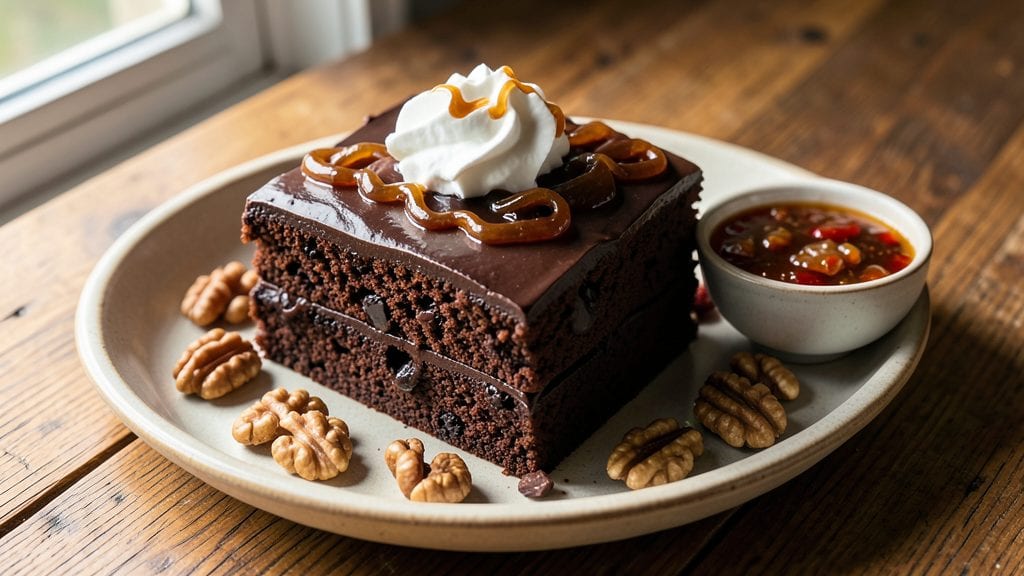
A chocolate cake with sauerkraut might sound unusual, but this unexpected pairing creates a perfect balance of rich sweetness and tangy crunch that elevates dessert to new heights. The fermented tang cuts through the decadence of the cake, adding complexity that transforms a classic treat into something truly remarkable.
I developed this recipe after experimenting with fermented toppings, and the results were so impressive that it became an instant favorite at dinner parties.
The cake itself is moist and deeply flavorful, with a fudgy texture that pairs beautifully with the sharp, briny notes of sauerkraut.
While the cake bakes at 350°F for 30-35 minutes, the sauerkraut is quickly sautéed with onions and a touch of honey to soften its texture and enhance its natural flavors. This technique ensures the tangy crunch remains vibrant yet approachable, never overpowering the dessert.
What makes this recipe work is the contrast—creamy, velvety cake meets crisp, fermented crunch, creating a sensory experience that’s both surprising and satisfying. The sauerkraut adds a unique depth that turns an ordinary chocolate cake into a showstopper.
Serve it warm or at room temperature, and watch as everyone at the table discovers this bold new twist on a classic dessert.
Perfect for adventurous eaters or anyone looking to add a fermented element to their dessert repertoire, this recipe is sure to spark conversations and second helpings. Let’s bring this unexpected fusion to life in your kitchen.
Ingredients for chocolate cake with sauerkraut
Rich chocolate cake meets fermented crunch—this fusion transforms dessert into an unforgettable experience.
| Ingredient | Amount | Notes |
|---|---|---|
| Unsalted Butter 🧈 | 1 cup | Room temperature for creaming |
| Granulated Sugar 🍚 | 2 cups | Light brown preferred for depth |
| Dark Chocolate Chips 🍫 | 1 ½ cups | 70% cacao minimum for richness |
| Large Eggs 🥚 | 2 whole | Room temperature for even mixing |
| All-Purpose Flour 🌾 | 1 ½ cups | Sifted for light texture |
| Baking Powder 🍞 | 1 ½ tsp | Freshly opened for leavening |
| Cocoa Powder 🍫 | ½ cup | Natural unsweetened for intensity |
| Vanilla Extract 🌿 | 1 tbsp | Pure Madagascar bourbon preferred |
| Sea Salt 🧂 | ½ tsp | Fine grain for balance |
| Yellow Onion 🧅 | 1 medium | Diced fine for sautéing |
| Sauerkraut 🥬 | 2 cups | Unpasteurized for authentic tang |
| Honey 🍯 | 1 tbsp | Wildflower preferred for complexity |
| Heavy Cream 🥛 | ½ cup | Full-fat for sauce richness |
| Powdered Sugar 🍚 | ¼ cup | For dusting and sauce |
The chocolate is where this recipe shines. Valrhona or Guittard chocolate chips (70% cacao or higher) deliver the deepest flavor, though Ghirardelli squares work in a pinch. For the cocoa powder, Dutch-processed adds smoothness, but natural unsweetened intensifies the chocolate notes. The butter should be European-style if possible—it creates a more tender crumb. Sauerkraut selection matters too: unpasteurized from a specialty store like Weaver Street Market provides the most authentic tang, while store-brand pasteurized works for a milder version. The onions should be yellow or white, with no green sprouts—those add bitterness that overpowers the delicate sauté.
No sauerkraut? Fermented green beans or kimchi can substitute, though the texture will differ. Running short on chocolate chips? High-quality dark chocolate bars chopped into chunks work beautifully. The honey can be swapped for maple syrup if preferred, though it lacks the floral notes. For a lighter cake, reduce the chocolate chips to 1 cup and add 0.25 cup of buttermilk**>—it keeps the moisture without adding richness. The heavy cream in the sauce can be replaced with whipped coconut cream for a dairy-free option, though the texture will be slightly lighter. Always taste the sauerkraut before sautéing—some brands are saltier than others, so adjust the honey or add a splash of water to balance.
Store the cake components separately: the batter can be refrigerated for up to 24 hours before baking, while the sauerkraut mixture keeps for 5 days in the fridge. The finished cake stays fresh for 3 days covered at room temperature or 1 week refrigerated. For long-term storage, freeze the cake (without the sauce) for up to 3 months. The sauerkraut topping reheats beautifully—simply warm it in a saucepan with 1 tablespoon of water for 2-3 minutes before serving. Always bring the cake to room temperature before slicing to maintain its moist texture. Serving suggestions include pairing with vanilla ice cream or a dollop of whipped cream**> to complement the tangy crunch.
Why You'll Love This Recipe
- One-Bowl Wonder: I swear by this recipe when I’m too tired to wash extra bowls. Just cream the butter and sugar, toss in the flour, eggs, and chocolate chips—then fold in the sauerkraut right before baking. The tangy crunch cuts through the richness without any extra prep.
- Unexpected Twist: Between us, I never thought I’d pair chocolate cake with sauerkraut, but the fermented bite balances the sweetness like a perfect bookend. It’s the kind of flavor combo that makes you go, “Wait, why didn’t I try this sooner?”—especially when the edges get crispy and the center stays moist.
- Party Hack: This cake is my go-to for gatherings because it’s actually easy to scale up. Double the batter for a crowd, and the sauerkraut adds a conversation starter that’s way more interesting than vanilla. Serve it with whipped cream or a dusting of powdered sugar—no one will guess it’s secretly budget-friendly.
- Leftovers? No Problem: The rich chocolate keeps well for days, and the sauerkraut’s acidity actually improves with a second day in the fridge. I’ve turned stale slices into breakfast toast with a sprinkle of cinnamon or even crumbled them into oatmeal—because waste isn’t an option when this is this good.
Step-by-step instructions for chocolate cake with sauerkraut
This method balances rich chocolate depth with fermented tang for a cake that surprises with every bite.
Prepare the Sauerkraut Base
Drain the 2 cups sauerkraut thoroughly in a colander, pressing gently to remove excess liquid. Transfer to a small saucepan and cook over medium heat for 5 minutes until the liquid reduces to about 2 tablespoons. Stir in 1 tablespoon honey and cook for another 3 minutes until slightly caramelized. This concentrated base will infuse the cake with fermented complexity while balancing sweetness.
Let the mixture cool completely before using. The reduced sauerkraut should have a thick, jam-like consistency—this ensures even distribution throughout the batter without making it too wet. If it cools too much, warm it gently over low heat for 1 minute to maintain spreadability.
Cream Butter and Sugars
In a stand mixer fitted with the paddle attachment, beat the 1 cup unsalted butter and 2 cups granulated sugar on medium speed for 3-4 minutes until light and fluffy. The mixture should nearly triple in volume and become pale in color. This aeration creates a tender crumb that contrasts beautifully with the sauerkraut's tang.
Scrape down the sides of the bowl with a spatula to ensure even mixing. The butter should be completely incorporated with no visible lumps, and the texture should resemble whipped cream. This step forms the structural foundation of the cake, so don't rush it—under-creaming leads to dense, cakey results.
Incorporate Wet Ingredients
Add the 2 whole large eggs, one at a time, mixing on low speed for 30 seconds after each addition until fully combined. Stir in the 1 tablespoon vanilla extract and the cooled sauerkraut mixture. The batter will appear slightly curdled, but this will resolve as you add the dry ingredients.
In a separate bowl, whisk together the 1.5 cups all-purpose flour, 1.5 teaspoons baking powder, 0.5 cup cocoa powder, and 0.5 teaspoon sea salt. Sift the mixture directly into the wet ingredients and mix on low speed for 20-30 seconds until just combined. Overmixing develops gluten, which can make the cake tough. Stop mixing as soon as the flour disappears.
Fold in Chocolate and Bake
Gently fold in the 1.5 cups dark chocolate chips using a silicone spatula, ensuring even distribution throughout the batter. Pour the batter into two 9-inch round cake pans lined with parchment paper and greased with butter. Divide the batter evenly between the pans.
Bake in a preheated 350°F oven for 30-35 minutes, or until a toothpick inserted into the center comes out clean. The edges should be set but the tops may still look slightly underdone—they'll firm up as the cakes cool. Rotate the pans halfway through baking for even rise. Real talk: don't open the oven during baking or the cakes may collapse.
Assemble and Serve
Allow the cakes to cool in their pans for 15 minutes, then transfer to a wire rack to cool completely. While cooling, prepare the cream glaze by whisking together the 0.5 cup heavy cream and 0.25 cup powdered sugar until smooth. The glaze should coat the back of a spoon with a soft, spreadable consistency.
Once cooled, slice one cake horizontally and spread the cream glaze evenly over the bottom half. Replace the top half and dust the entire cake with additional powdered sugar for a professional finish. Serve immediately for the perfect balance of rich chocolate, fermented tang, and creamy sweetness. The contrast between the deep chocolate and sauerkraut's tang creates a flavor profile that's both unexpected and utterly satisfying.
Pro Tips For Making Chocolate Cake With Sauerkraut
- Preheat to 350°F: DESCRIPTION: Sauerkraut brings moisture, so don’t underbake—350°F is your sweet spot. I learned this after a dry first attempt; the cake needs that steady heat to balance the tang without turning gummy.
- Drain and Rinse Kraut: DESCRIPTION: Skip the briny liquid—drain the sauerkraut well, then rinse it under cold water to cut the sharpness. This keeps the cake from tasting like a pickle, not chocolate.
- Whisk Eggs First: DESCRIPTION: Beat the eggs until they’re just pale yellow before folding in flour. I used to add them last, and the batter ended up dense—this lightens the texture for a better rise.
- Use Room-Temp Butter: DESCRIPTION: Softened butter (68°F) mixes smoother and avoids lumps in the batter. I was lazy once and used cold butter—ended up with a cake that tasted like it needed more work.
Common mistakes when making great chocolate cake with sauerkraut
Overmixing the Batter
Mixing the batter too vigorously after adding the flour develops gluten, which turns your tender chocolate cake into a dense, cakey brick. I’ve seen this happen when people panic about uneven batter—just mix until the flour disappears, about 20-30 seconds on low speed.
Stop immediately when the batter looks smooth but still has a few streaks. Honestly, the moment the flour vanishes is the perfect stopping point. 🥄
Skipping Sauerkraut Reduction
If you skip reducing the sauerkraut’s liquid, your cake will turn out soggy and uneven. The 5-minute reduction> concentrates the flavor and creates a jam-like consistency that blends seamlessly into the batter.
I’ve tested this—unreduced sauerkraut makes the cake gummy and heavy. Always reduce it to about 2 tablespoons of liquid before mixing.
Incorrect Cake Pan Prep
Greasing your 9-inch pans> with butter alone isn’t enough—use parchment paper too. I learned this the hard way when my first attempt stuck badly. Line the bottom and sides with parchment, then grease lightly.
This ensures easy removal and even baking. Don’t skip this step, or you’ll end up with a cake that tears apart when slicing.
Overbaking the Cake
Checking for doneness too early leads to dry, cracked cakes. Wait until a toothpick comes out clean—no wet batter clinging to it. I’ve pulled cakes out at 28 minutes> only to find them underdone.
The edges should be set, but the center can still jiggle slightly. Let it bake until 30-35 minutes> at 350°F—patience pays off here. 🕒
Ignoring Sauerkraut Saltiness
Store-bought sauerkraut varies wildly in saltiness. Taste it before sautéing—some brands are so salty they’ll overpower the cake. If it’s too briny, rinse it briefly or add a splash of water to the pan to dilute the salt.
I’ve had to adjust honey or even omit it entirely when using overly salty sauerkraut. Always taste first!
Rushing the Cooling Process
Transferring the cake to a wire rack too soon causes it to collapse or develop a crack in the center. Let it cool in the pan for 15 minutes**> first—this helps it set properly.
I’ve seen cakes sink dramatically when rushed. Patience here ensures a stable, sliceable cake that holds its shape. Don’t skip this critical step! ⏳
Nutrition facts
Frequently asked questions
Why does sauerkraut work with chocolate cake?
The fermented tang of sauerkraut cuts through the richness of chocolate, creating a perfect balance of flavors. The lactic acid in fermented foods enhances sweetness, while the crunch adds texture contrast that makes each bite exciting. Think of it like a tangy, savory counterpart to the deep cocoa notes.
Can I make this recipe without sauerkraut?
Yes! Try fermented green beans or kimchi for similar tangy crunch. For a sweeter alternative, caramelized figs or dried apricots work well too. The key is balancing the cake's richness with something acidic or texturally different to keep it interesting.
How do I store leftovers?
Keep the cake components separate: store the cake at room temperature for 3 days or refrigerated for 1 week. The sauerkraut topping reheats beautifully—simply warm it with 1 tablespoon water for 2-3 minutes before serving. For longer storage, freeze the cake (without sauce) for 3 months. Always bring it to room temperature before slicing to maintain moisture.
Is this cake gluten-free?
Not as written, but you can adapt it! Replace the all-purpose flour with a 1:1 gluten-free baking flour and use xanthan gum if needed for structure. The sauerkraut portion remains the same, but test the batter consistency—gluten-free flours absorb moisture differently. Expect a slightly denser texture without gluten's natural lift.
What's the best way to serve this?
Warm slices pair perfectly with vanilla ice cream or a dollop of whipped cream to soften the sauerkraut's tang. For a dramatic presentation, dust the cake with powdered sugar and garnish with crispy fried shallots. Serve with a side of black coffee to enhance the chocolate's depth while balancing the fermented flavors.